Monday, 12 March 2012

The Elf with the Upside-Down Heart


OUR DEAR FRIEND THOMAS died a month ago. His thirty year old dragon-knot of a heart stopped its unique, time-borrowed beating one morning in January where, at home beside his beloved wife Lunar, he fell through. Too soon this was, too soon; and we are all left standing holding this loss that is too big and too sore to look at. Though his heart was configured back to front, it was one of the finest I've known. And now his wife and his small daughter must keep walking through their days with this absence shouting louder and bigger than I can begin to imagine.


Thomas was one of those wonderful people who are happy and awake to their every moment; an artist and archaeologist, a folklorist and craftsman, he dwelt a good deal of the time in a land alongside ours, and his way through was an intricately carved Dark Age gateway, woven from thirteen magical trees. 

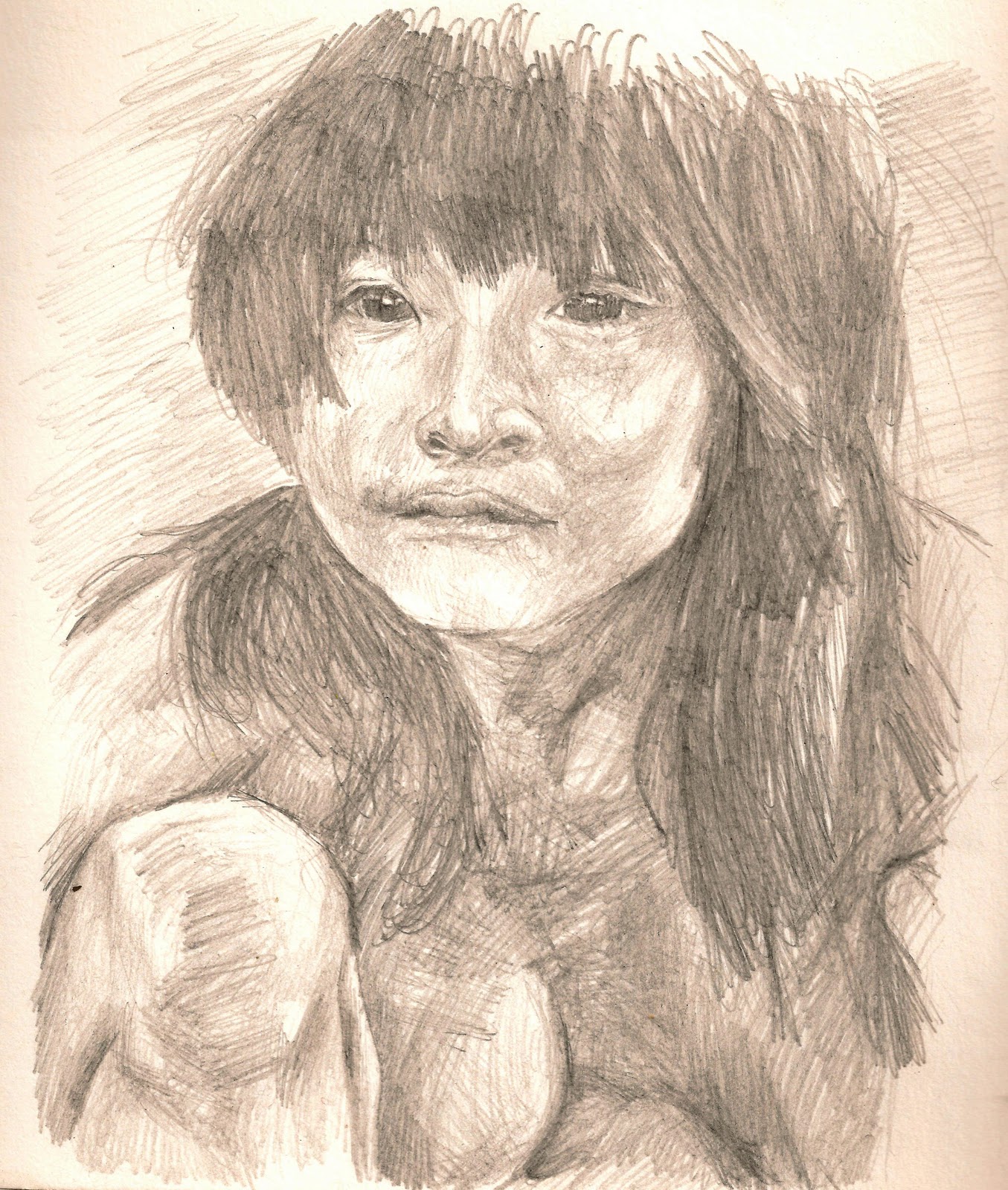
Drawing by Thomas Hine - Galmearian Elder

Drawing by Thomas Hine - Elvish Globe

Drawing by Thomas Hine - Thread Spruce

I never actually had this conversation with him, but I know that our worlds were kin. His realm was peopled with peasants and magicians, who dwelt in smoke-filled thatched roundhouses, wore green and brown and had true hearts. His imagination was edged with Celtic knotwork which trailed, spell-like into his everyday, though spelling of the other sort was strangely quite unfathomable to him, and his handwriting could easily be mistaken for an untranslated prehistoric inscription.

Drawing by Thomas Hine - Elvish Map
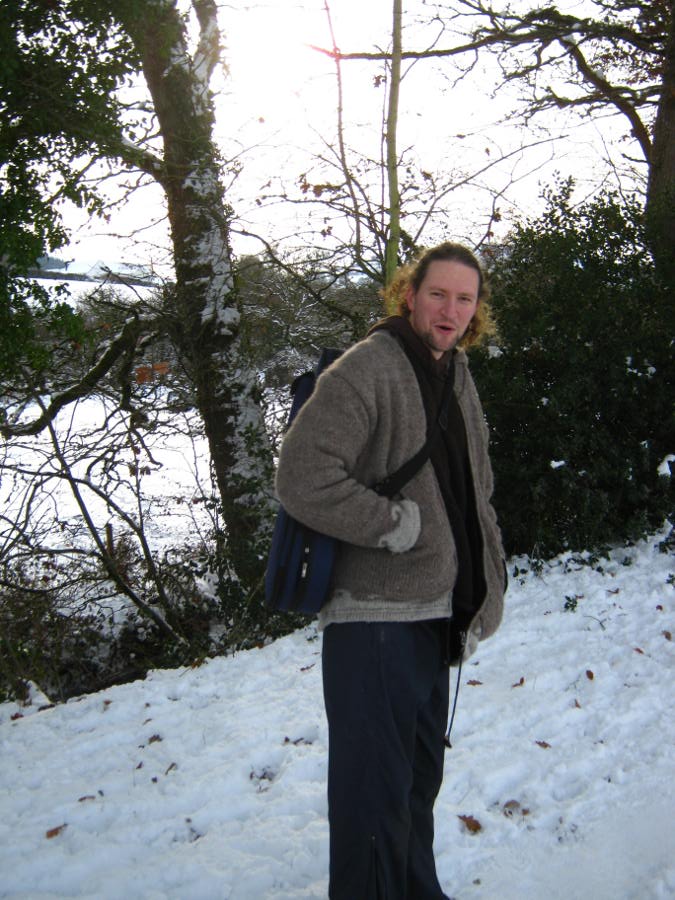
Tom & Thomas at the Sticklepath Fireshow watching the puppets (made by Thomas) burn

Thomas teaches me archery

Thomas was tall and gentle, with a shock of wiry hair, and a quietness of manner that sheltered endless interesting thoughts. He would make artefacts from wood and hang them in the forest where folk may or may not find them and moss would certainly take them, he collected folk songs and children's playground rhymes, he delighted in making fires, he wrote repeatedly to his MP in support of Travellers, he made elf doors and conjured ancient tribes, he only told the truth, he was writing a book of local folklore, he taught me to shoot a bow and arrow, he played the fiddle, and knew more than almost anyone about the three hares. But of all things, he loved best his family, whom he treasured and honoured and cared for with a gentle and determined fierceness which was wonderful to see. 


Since Thomas died, I have got to know strands of him I didn't know before, as this wonderful community of ours weaves itself around his death and darns the wound with arms. I am astonished and proud of our village on the edge of the moor – I can see that it does well these hard hard things, and I can see that here those whose pain is the sharpest will continue to be cared for well and will be caught again and again when they stumble. I have valued enormously being able to share a grief with others who knew and loved our friend too, but each in a different way, so that in comforting we can exchange our versions of Thomas, and continue to get to know him from many different angles, even though he has gone. 

Thomas holds one of his elf doors

And I've valued the story of him, and found comfort in myth, as I so often do. That he is spoken of perhaps now on some kingly grey road by his Middle-Earth-inclined friends honours him and comforts me in an odd way, though I don't know whether it's true, and indeed I think Thomas himself believed death led to compost. The elf doors he made are dotted all over the village; there's one half way up our stairs which he made for us as a house warming gift and which we pass every night on the way to bed. I don't think we can say what death is, but I like the fact that Thomas left small doorways in hedges before stepping through.


And for a funeral, he had the most heartfelt and earthy handmade ceremony and celebration I've ever experienced. We gathered forest-coloured in our hundreds accompanied by at least two morris sides, Thomas laying amongst us in a handmade felt leaf cocoon as the children ran about him. 


The ceremony was made by those who loved him (and there were many, many), with words and music and art. We made our way through the village to the top of the hill carrying Thomas between us, as overhead flew birds made by the children, in honour of the sky burial he had wished for. 


On the hilltop, overlooking the land he loved so much, beside the hill where he and Lunar married, our friend was laid in the earth. I was supposed to play music at this point but failed miserably to summon any coherent tunes through my tears. The children sat and watched and placed earth and gifts in the grave along with the rest of us, and we walked back down the hill to share food and memories and music and art. 
 

It was an intense and real and moving day, and the days since have held our sadness which morphs as grief does, neither lessening nor leaving, just moving like water through the shapes of us.


Spring has been pushing up through these days too, and Thomas's daughter has turned two. I made a book which is currently being passed from household to household... in it we'll write and paint our memories of Thomas, we'll stick photos and tales, and create a treasure chest of this man for his girl when she grows and wants to weave the strands of her father which are hard to catch hold of into her hair.


Lunar now has a hard hill to climb, but not alone, and I am already inspired and staggered at the grace and strength and wisdom with which she has stepped out on this stony path. Artful wordsmith that she is, she has told beautifully and strongly of their loss. There was great truth in words she spoke at a gathering we had the day after Thomas died: she said that though his heart did not last many years, it seemed wiser to measure a heart in love rather than in time, and going by that measure, he was an ancient, ancient man.


I leave you with Thomas's words about himself, which I always liked, written for his emporium of elf doors:

Qualified in Archaeology, obsessed with folklore, in love with the land, besotted by my family. Devon my soul, Cymru my dreams, Gaia my love, twisted my heart.
This hill on which I live is alive with possibilities... 
Which path should I take?
The road compacted with footfalls does not grab me. I have never worn those heavy boots for long.
The road less traveled looks appealing - artists, musicians, storytellers. And yet...
And yet much more so than either is the glade between the paths, the ambling place, the twisted knot of flowers striving for the sun. 
Maybe I shall sit here a while, and dip my pen into the inkwell of the earth, doodle my dreams on the canvas of the sky...
I am here to live strong and real. 
So far I have done it.


Sunday, 1 January 2012

Rise & Root


I HAD A DREAM a few weeks ago in which several symbols appeared before me. They had no context, just were there. One of them remained with me upon waking, and I became determined to discover its meaning. It was a rune-like sign, made of straight sections, and looked like this:


I’ve been paying more attention to my dreams recently, and this sign seemed to need deciphering. I went first to the runes for a meaning, but though my symbol was very like a rune, I found none like mine. Then I searched amongst the Ogham alphabet. At first I thought it must be the Ogham cipher for birch which is made up of a vertical straight line, a shorter horizontal heading out to the right from the centre and at the base (as begins or ends all Ogham letters when written alone) an inverted V, making two legs. This was the symbol most like mine I could find, though it wasn’t quite satisfactory - my symbol had three legs and a diagonal stroke to the right. 


For a while I sat with birch trees and wondered, until one day I found the answer in my sketchbook. I was drawing ideas for an image I’ve had sitting on my shoulder for a while; as the imagery came out of my pencil in rough scribbles of ideas, I spotted the symbol hiding in amongst the sketching, and it gave me impetus to carry the idea through to a finished design. 


For some time I have wanted to make an image with which to start a quiet revolution on the backs of service station toilet doors, on the billboards behind carparks, over the screens of insidious train-journey advertising. In deep hatred for the feeling I get when I am forced to enter motorway service station cafes, shopping malls or toilets, I wanted to rail against all that is bland and homogeneous and commercial and life-suckingly chrome-and-concrete and spreading un-refuted like a disease across our land. I imagined planting little seeds of hope and solidarity in the form of a beautiful and rousing image which I would stick between the scrawlings of desperation and ugliness in the perfumed, disinfected cubicles made for us to shit in whilst we are not at home. The backs of public toilet doors are a fascinating melting pot of honest expression, dissent and advertising; it feels like there’s a communication between strangers played out there in this, the most private of rooms, and this is the way I wanted to communicate: liminally.


I suppose I wanted to plant my revolution-seed in the dirt in the cracks of the pavements, in the dirt between the formica and polyester, in the dirt pushed to the edges of millions of touchscreens, in the dirt underneath escalator rails and hygienic hand-dryers. Like the gargoyles and marginal grotesques of the middle ages, I wanted to coax beauty in once more like a stranger to the citadels of public ugliness we all have become so used to. I wanted to surprise and unnerve and delight and disedge all the lovely human beings who have grown so unseeing in the unbeautiful subway of their daily rush through these places. I wanted ivy to grow over all the chrome and adverts, its clinging rootlets ruining the L'Oréal shine with their ancient, living patination, and its roots grinding escalators to a twisted halt. I wanted green silence to toll through the noisy claustrophobia of shopping malls and for the shoppers to break their ankles on huge ancient roots, which had crept in past the security guards (notwithstanding hoodies and ASBOs) to smash up the shops. I wanted to grab them by the hand, and run with them (limping) to the dark woods and remind them that they are powerful.


And so I made this drawing for you - Rise & Root - a symbol perhaps, a waymarker for the Zapatistas of suburbia. As I drew the rooted tree-people raising their fists, I realised that they were the embodiment and representation of my dream-rune: raised fists to the fight, and roots in the earth. I give you this image to do with what you wish: download it, reblog it, print it, photocopy it, make it into stickers and take them with you in your bag to stick on the backs of public toilet doors, on supermarket conveyor belts or over underground advertising screens; make it into a poster, a projection, print it on bags and T-shirts, paint it large on the sides of petrol stations, pavements, parliaments. 
Or take the rune as a symbol we’ll all recognise when it’s chalked on our doorsteps, and tattooed on our foreheads.
I want this image not to be for sale - take it freely and use it, let’s make it spread unrelenting from the edges, appearing everywhere, but not obviously authored. I will not make a website about it. It is rough, and black-and-white as a badly photocopied pamphlet. It is yours. A gift to our revolution for Two Thousand And Twelve. Take it and run.


Saturday, 24 December 2011

Unsnow


THOUGH THERE ARE PRIMROSES growing outside our house, and coat-wearing is a matter of choice, they tell us this is December, and midwinter passed without our breaths becoming visible in the air. Nevertheless we have hung lights and evergreenery in our houses, and lit fires against the cold that hasn't yet come. And nature, in puzzlement, has bedecked herself in winter costume - white-green lichen for snow, and unfallen apples for baubles. Her branches are as beautiful as frost-furry antlers, but warm still and waiting, waiting for the snow...


My days have been a clockwork of hectic, but now we settle in for spiced and flickering nights with each other and the dark fathoms-deep Dartmoor sky. I want to wish you all the most wonderful Yuletide and a year of good true adventures to follow. Thank you most earnestly for all your kind kind words and for your support and purchases and donations this year, and for continuing to read and to look at what I scatter here with such delight, it really does mean a great deal to me. Thank you to all those who snapped up the winter cards, I was unprepared for the enthusiastic uptake! There'll be more available in the new year when my shop reopens. Before too long, I'll gather all the loose strings of things still to tell, but for now, on this Night Before Christmas, I wish for something unexpected and wonderful in each of your stockings hanging now by your fires, and I leave you with words from one of my most cherished writers - someone I would have dearly loved to meet, someone who for me in the winter, becomes a kind of godmother through her wise and quiet words - Tove Jansson, who brings us snow... 


Snow

by Tove Jansson

________________________


When we got to the strange house it began to snow in quite a different way. A mass of tired old clouds opened and flung snow at us, all of a sudden and just anyhow. They weren't ordinary snowflakes – they fell straight down in large sticky lumps, they clung to each other and sank quickly and they weren't white, but grey. The whole world was as heavy as lead. 

Mummy carried in the suitcases and stamped her feet on the doormat and talked the whole time because she thought the whole thing was such fun and that everything was different. 

But I said nothing because I didn’t like this strange house. I stood in the window and watched the snow falling, and it was all wrong. It wasn't the same as in town. There it blows black and white over the roof or falls gently as if from heaven, and forms beautiful arches over the sitting-room window. The landscape looked dangerous too. It was bare and open and swallowed up the snow, and the trees stood in black rows that ended in nothing. At the edge of the world there was a narrow fringe of forest. Everything was wrong. It should be winter in town and summer in the country. Everything was topsy-turvy. 

The house was big and empty, and there were too many rooms. Everything was very clean and you could never hear your own steps as you walked because the carpets were so big and they were as soft as fur. 

If you stood in the furthest room, you could see through all the other rooms and it made you feel sad; it was like a train ready to leave with its lights shining over the platform. The last room was dark like the inside of a tunnel except for a faint glow in the gold frames and the mirror which was hung too high on the wall. All the lamps were soft and misty and made a very tiny circle of light. And when you ran you made no noise. 

It was just the same outside. Soft and vague, and the snow went on falling and falling. 

I asked why we were living in this strange house but got no proper answer. The person who cooked the food was hardly ever to be seen and didn't talk. She padded in without one noticing her and then out again. The door swung to without a sound and rocked backwards and forwards for a long time before it was still. I showed that I didn't like this house by keeping quiet. I didn't say a word.

In the afternoon the snow was even greyer and fell in flocks and stuck to the window-panes and then slid down and new flocks appeared out of the twilight and replaced them. They were like grey hands with a hundred fingers. I tried to watch one all the way as it fell, it spread out and fell, faster and faster. I stared at the next one and the next one and in the end my eyes began to hurt and I got scared. 

It was hot everywhere and there was enough room for crowds of people but there were only two of us. I said nothing. 

Mummy was happy and rushed all over the place saying: “What peace and quiet! Isn't it lovely and warm!” And so she sat down at a big shiny table and began to draw. She took the lace tablecloth off and spread out all her illustrations and opened the bottle of Indian ink. 

Then I went upstairs. The stairs creaked and groaned and made lots of noises that stairs make when a family has gone up and down them for ages. That’s good. Stairs should do that sort of thing. One knows exactly which step squeaks and which one doesn't and where one has to tread if one doesn't want to make oneself heard. It was just that this staircase wasn't our staircase. Quite a different family had used it. Therefore I thought this staircase was creepy. 

Upstairs all the soft lamps were on in the same way and all the rooms were warm and tidy and all the doors were standing open. Only one door was closed. Inside, it was cold and dark. It was the box room. The other family’s belongings were lying there in packing-cases and trunks and there were mothproof bags hanging in long rows with a little snow on top of them. 

Now I could hear the snow. It was falling all the time, whispering and rustling to itself and in one corner it had crept onto the floor.

The other family was everywhere in there, so I shut the door and went down again and said I wanted to go to bed. Actually I didn't want to go to bed at all, but I thought it would be best. Then I wouldn't have to say anything. The bed was as wide and desolate as the landscape outside. The eiderdown was like a hand, too. You sank and sank right to the bottom of the earth under a big soft hand. Nothing was like it was at home, or like anywhere else. 

In the morning it was still snowing in just the same way. Mummy had already got started with her work and was very cheerful. She didn't have to light fires or get meals ready and didn't have to be worried about anybody. I said nothing. 

I went to the furthest room and watched the snow. I had a great responsibility and had to see what the snow was doing. It had risen since yesterday. A thousand tons of wet snow had slithered down the window-panes, and I had to climb onto a chair to see the long grey landscape. The snow had risen out there, too. The trees were thinner and more timid and the horizon had moved further away. I looked at everything until I knew that soon we would be done for. This snow had decided to go on falling until everything was a single, vast wet snowdrift, and nobody would remember what had been underneath it. All the trees would sink into the earth and all the houses. No roads and no tracks – just snow falling and falling and falling. 

I went up to the boxroom and listened to it falling, I heard how it stuck fast and grew. I couldn't think of anything but the snow. 

Mummy went on drawing. 

I was building with the cushions on the sofa and sometimes I looked at her through a peephole between them. She felt me looking and asked: “Are you alright?” while she went on drawing. And I answered: “of course”. Then I crept on hands and knees into the end room and climbed onto a chair and saw how the snow was sinking down over me. Now the whole horizon had crept below the edge of the world. The fringe of forest couldn't be seen any longer; it had slid over. The world had capsized, it was turning over quietly, a little bit every day. 

The very thought of it made me feel giddy. Slowly, slowly, the world was turning, heavy with snow. The trees and houses were no longer upright. They were slanting. Soon it would be difficult to walk straight. All the people on earth would have to creep. If they had forgotten to fasten their windows, they would burst open. The doors would burst open. The water barrels would fall over and begin to roll over the endless field and out over the edge of the world. The whole world was full of things rolling, slithering and falling. Big things rumbled, you could hear them from far off, and you had to work out where they would come, and get away from them. Here they were, rumbling past, leaping in the snow when the angle was too great, and finally falling into space. Small houses without cellars broke loose and whirled away. The snow stopped falling downwards, it flew horizontally. It fell upwards and disappeared. Everything that couldn't hold on tight rolled out into space, and slowly the sky went dark and turned black. We crept under the furniture between the windows, taking care not to tread on the glass. But from time to time a picture or a lamp bracket fell and smashed the window-pane. The house groaned and the plaster came loose. And outside, large heavy objects rumbled past, rolling right through the whole of Finland all the way down from the Arctic Circle, and they were even heavier because they had collected so much snow as they rolled and sometimes people fell past screaming all the time.

The snow on the ground began to slither away. It slid in an enormous avalanche which grew and grew over the edge of the world … oh no! oh no! 

I rolled backwards and forwards on the carpet to make the horror of it seem greater, and in the end I saw the wall heave over me and the pictures hung straight out on their wires. 

“What are you doing?” Mummy asked. 

Then I lay still and said nothing. 

“Shall we have a story?” she asked, and went on drawing. 

But I didn’t want any other story than this one of my own. But one doesn't say that sort of thing. So I said: “Come up and look at the attic.”

Mummy dried her Indian ink pen and came with me. We stood in the attic and froze for a while and Mummy said “It’s lonely here,” so we went back into the warmth again and she forgot to tell me a story. Then I went to bed.

Next morning the daylight was green, underwater lighting throughout the room. Mummy was asleep. I got up and opened the door and saw that the lamps were on in all the rooms although it was morning and the green light came through the snow which covered the windows all the way up. Now it had happened. The house was a single enormous snowdrift, and the surface of the ground was somewhere high up above the roof. Soon the trees would creep down into the snow until only their tops stuck out, and then the tops would disappear too and everything would level itself off and be flat. I could see it, I knew. Not even praying would stop it.  

I became very solemn and quite calm and sat down on the carpet in front of the blazing fire. 

Mummy woke up and came in and said, “Look how funny it is with snow covering the windows,” because she didn't understand how serious it all was. When I told her what had really happened, she became very thoughtful. 

“In fact,” she said after a while, “we have gone into hibernation. nobody can get in any longer and no one can get out!” 

I looked carefully at her and understood that we were saved. At last we were absolutely safe and protected. This menacing snow had hidden us inside in the warmth for ever and we didn't have to worry a bit about what went on there outside. I was filled with enormous relief, and I shouted, “I love you, I LOVE YOU,” and took all the cushions and threw them at her and laughed and shouted and Mummy threw them all back, and in the end we were lying on the floor just laughing. 

Then we began our underground life. We walked around in our nighties and did nothing. Mummy didn't draw. We were bears with pine needles in our stomachs and anyone who dared come near our winter lair was torn to pieces. We were lavish with the wood, and threw log after log onto the fire until it roared. 

Sometimes we growled. We let the dangerous world outside look after itself; it had died, it had fallen out into space. Only Mummy and I were left.

It began in the room at the end. At first it was the nasty scraping sound made by shovels. Then the snow fell down over the windows and grey light came in everywhere. Somebody tramped past outside and came to the next window and let in more light. It was awful. 

The scraping sound went along the whole row of windows until the lamps were burning as if at a funeral. Outside snow was falling. The trees were standing in rows and were as black as they had been before and they let the snow fall on them and the fringe of forest on the horizon was still there. 

We went and got dressed. Mummy sat down to draw. 

A dark man went on shovelling outside the door and all of a sudden I started to cry and I screamed: “I’ll bite him! I’ll go outside and bite him!” 

“I shouldn’t do that,” Mummy said. “He wouldn't understand.” She screwed the top onto the bottle of Indian ink and said: “what about going home?” 

“Yes,” I said. 

So we went home.


Sunday, 4 December 2011

Wayfarers' Nativity


THE NIGHT COMES EARLY these days, leaning up against our old rattly windowpanes, which ooze condensation and owlsong from four o'clock on. The long evenings afford us time to do Things Indoors by the fire, or at our dark desks. In the picture above, you might just be able to make out the image emerging on the paper below the lamp - but only in the reflection in the window.
It's a new winter painting - a ritual I've kept for some years now - to make a new snowy painting at this dark end of the year. No other time of year seems to call me to paint it so regularly, and these winter paintings always end up on my Christmas cards when I send them. 

This year I decided (at long last) to make Winter Cards to sell, which meant completing this snowy painting early so that the cards could be designed and ordered in time for fairs and for you to buy to send...
Which meant that I couldn't labour over a detailed creation for weeks on end, and since I've been trying to force a freer looseness in my work of late to combat my finickity temperament, I made this a watercolour of quick light sketchy strokes, and tried to draw with the paintbrush in splodges rather than with hair-thin lines. I deliberately used a paintbrush slightly too big and determined to finish this in two days. 

So here follows the progress of this work in pictures....

The image - a kind of gathering of nomadic folk, stopping to set up camp and collect firewood amongst the trees in the snow - I drew quickly, without worrying it too much, and without "finishing" the figures at the pencil stage which I am prone to doing:


Then I splurged on some sky, and put colour on clothing, not worrying if the paint ran over the edges, or colours mixed in unintended spots...


My accuracy with the too-big paintbrush was a little haphazard around the trees and I intentionally left watermarks where wet and dry paint met. I put on loose washes over the faces and left a space for the firesmoke too...


Gradually, each little figure was put in, suggested rather than drawn...


All of the painting came straight from my imagination, drawn and painted without reference to anything, except my inner snowy, firelit world.
Some of the scenes were very small...


And then I began to add other details around the figures - small blueish brown splodges for snow-footprints all around the encampment, and twigs in hands and on backs...


Finally, when all the paint was painted and dry, I coaxed the important bits out with a pencil, sending back the darks and tucking in the edges...


Though I decided in the end to leave the trees and their edges with the sky alone - just rough seagreen watercolour, not heeding its proper boundaries...


But I drew in the faces softly where I could...


And then, almost to my own surprise, it was done.


And here it is, Wayfarers' Nativity available to buy as a print in my shop now.
The tribe, whoever they are, gather wood for the fire in the midst of cold white winter to warm the stew in the pot, and to warm the babe in arms, just visible inside the bender. I didn't know this was going to be a nativity painting to begin with, but it has become somehow an alternative to the story we all know, yet really the same: where we all bring gifts to the child of light in the dark days of winter. The gift in this case is the gift of firewood, which in a life on the move, mostly lived under the sky, is the most important gift of all: warmth.


And so to Winter Cards....
I've been busy selling at Advent Fairs and setting up my little December exhibition in the bustling Courtyard Wholefood Shop and Cafe in Chagford, where my cards are for sale next to the cakes. I'll write about this soon, but meanwhile... here are the cards, a selection of eight of my wintry paintings from the past few years, packaged all together, or as single cards and packs of four.


They are printed on lovely heavy white card stock, with a very subtle matt sheen and come with recycled brown envelopes. The eight designs included are: 

Baba Yaga
Balalaika
Telling Stories to the Trees
Father Christmas
Picking Up Sticks
Winter Crow
Wintersong
Wayfarers' Nativity


The cards are all wrapped up and sitting in the shop waiting to be posted out to you. I hope you like them. If you live overseas and would like to send these on before Christmas, you might be wise to order them soon before the postal services get too hectic.

Days are getting chillier here on the edge of the moor, and the first noticeable frost crept into the fields around our house on the first day of December. Macha has taken the warmest spot on the rug by the fire, and we busy on, readying ourselves for dark lamplit evenings, mulled-wine-stitched musical gatherings, and gathering plenty of firewood to warm the Winter Child. 


***POSTSCRIPT***
Also, I have a giclée print of Baba Yaga up in an auction which is running til December 18th in aid of our dear Terri Windling who has struggled financially lately due to a combination of health and legal difficulties. Her worldwide circle of friends and fans have gathered an enormous amount of creativity and support and this auction is full to bursting - a veritable Goblin Marketful of delights. Please go and support it in any way you can - either by bidding or offering or word-spreading. Terri has inspired and helped so many of us, she deserves this support.